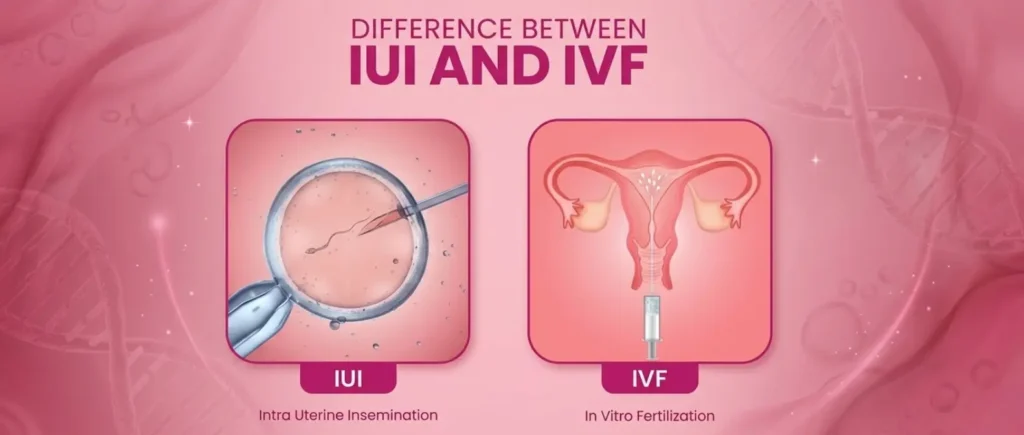
Infertility treatment has helped many couples achieve pregnancy. Among the most common assisted reproductive techniques are IVF (In Vitro Fertilisation) and ICSI (Intracytoplasmic Sperm Injection).
Both treatments involve fertilising an egg with sperm in a laboratory before placing the embryo into the uterus. However, the way fertilisation happens is different.
Understanding IVF vs ICSI helps couples know why doctors recommend one method instead of the other.
What is the difference between IVF and ICSI?
IVF and ICSI are fertility treatments where fertilisation happens in a laboratory. In IVF, eggs and sperm are placed together in a dish so fertilisation occurs naturally. In ICSI, a single sperm is directly injected into the egg using a special microscope. ICSI is often used when there are serious sperm problems.
What is IVF Treatment?
IVF (In Vitro Fertilisation) is a fertility treatment where fertilisation occurs outside the body.
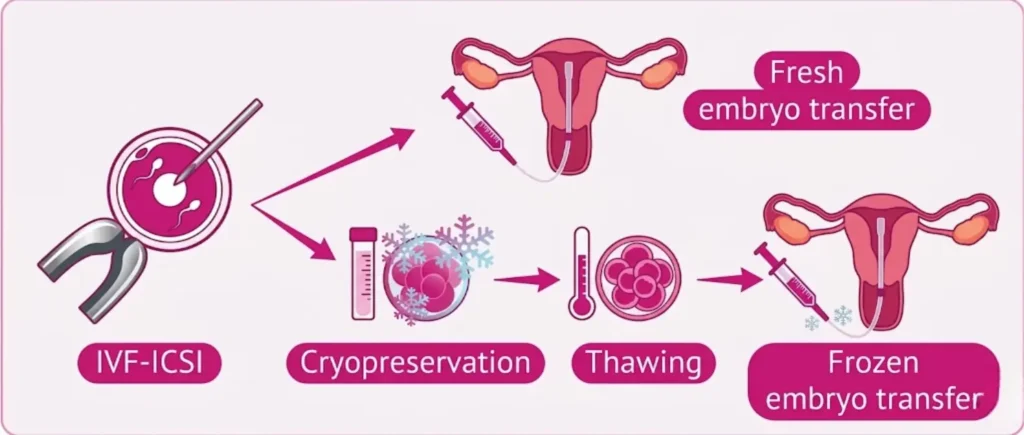
During IVF, eggs are collected from the ovaries and mixed with sperm in a laboratory dish. The sperm naturally fertilises the egg, leading to embryo formation.
The embryo is later placed inside the uterus so pregnancy can begin.
IVF has helped millions of couples across the world become parents.
Basic Steps of IVF
Ovarian stimulation
using hormonal medicines
Egg retrieval
from the ovaries
Sperm collection
and preparation
Fertilisation
of egg and sperm in laboratory
Embryo development
for a few days
Embryo transfer
into the uterus
What is ICSI Treatment?
ICSI (Intracytoplasmic Sperm Injection) is an advanced laboratory technique used within IVF.
Instead of allowing sperm to fertilise the egg naturally, a fertility specialist selects one healthy sperm and injects it directly into a mature egg.
This method helps fertilisation when sperm cannot reach or enter the egg on its own.
ICSI is widely used in cases of male infertility problems.
IVF vs ICSI: Key Differences
Although both treatments are part of assisted reproductive technology, their fertilisation method is different.
When Doctors Recommend IVF
IVF treatment may be suggested when pregnancy does not occur through simpler treatments.
Doctors may advise IVF in conditions such as:
- Blocked or damaged fallopian tubes
- Endometriosis
- Ovulation problems
- Unexplained infertility
- Failed IUI cycles
In these situations, IVF allows fertilisation to happen outside the body under medical supervision.
When ICSI Treatment is Recommended
ICSI is mainly used when sperm quality is very poor or when fertilisation may not happen naturally.
Doctors may recommend ICSI in cases such as:
- Low sperm count
- Poor sperm movement (motility)
- Abnormal sperm shape
- Previous IVF fertilisation failure
- Surgically retrieved sperm from testis
Because the sperm is directly injected into the egg, ICSI helps overcome many sperm-related fertility problems.
IVF vs ICSI Success Rate
The success rate of IVF and ICSI can be similar in many cases. However, ICSI often improves fertilisation rates when sperm problems exist.
Average Fertilisation Rate
| Treatment | Fertilisation Rate |
|---|---|
| IVF | 60–70% |
| ICSI | 70–85% |
However, pregnancy success depends on many factors:
- Age of the woman
- Egg quality
- Sperm quality
- Embryo health
- Overall reproductive health
A fertility specialist evaluates these factors before selecting the technique.
IVF or ICSI: Which Treatment May Be Suitable?
The choice between IVF and ICSI depends on the fertility problem.
IVF may be suitable when sperm quality is normal and infertility is related to female reproductive conditions.
ICSI may be recommended when sperm cannot fertilise the egg naturally.
A fertility specialist studies test reports, medical history, and previous treatments before suggesting the best option.
Expert Fertility Care in Delhi
Choosing the right fertility treatment becomes easier with proper medical guidance.
At Bhargavi IVF and Fertility Care, patients receive personalised fertility evaluation and treatment guidance.
Consultation with an experienced fertility specialist can help identify the cause of infertility and decide the most suitable treatment.
Frequently Asked Questions
Is ICSI more successful than IVF?
ICSI may give higher fertilisation rates when sperm problems exist. However, overall pregnancy rates can be similar when sperm quality is normal.
Can IVF be done without ICSI?
Yes. When sperm quality is normal, standard IVF without ICSI is often used.
Why do doctors recommend ICSI?
Doctors recommend ICSI when sperm count, movement, or shape is poor, or when fertilisation failed in a previous IVF cycle.
Final Thoughts
Both IVF and ICSI are advanced fertility treatments that help couples achieve pregnancy.
IVF allows fertilisation to occur naturally in a laboratory dish, while ICSI uses a specialised technique where a single sperm is injected into the egg.
The right method depends on the cause of infertility, especially sperm quality and reproductive health conditions.
With proper diagnosis and expert care, many couples can successfully begin their journey toward parenthood.